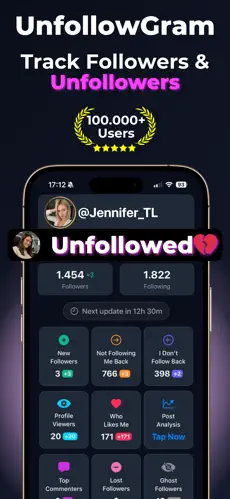
Instagram's built-in Insights provide basic metrics for business and creator accounts: impressions, reach, profile visits. What they do not provide is audience quality assessment, competitive comparison, or historical trend analysis across public profiles. A dedicated follower analyzer fills those gaps.
Why Engagement Rate Matters More Than Follower Count
An account with 50,000 followers and a 0.3% engagement rate performs worse in Instagram's algorithm than an account with 5,000 followers and a 4% engagement rate. The algorithm distributes content based on predicted engagement, not audience size. Follower analysis reveals whether a large audience is actually engaged or mostly inactive.
Accounts that accumulate ghost followers over years of activity often see declining reach despite a growing follower count. The inactive followers dilute the engagement rate, which signals to Instagram's algorithm that the content is not worth distributing widely.
Using Analysis for Influencer Vetting
Brands evaluating influencer partnerships use follower analysis to verify claims. An influencer reporting 100K followers with a 0.2% engagement rate presents a different value proposition than one with 30K followers and a 5% engagement rate. The analyzer provides the data points needed for this comparison without requiring access to the influencer's private Instagram Insights.
Competitive Benchmarking
Analyzing competitor accounts reveals what engagement rates are typical in a niche. If competing accounts average 3% engagement rate and your account shows 1.5%, that gap identifies a specific area for improvement. Without benchmark data, isolated metrics provide no context for whether performance is strong or weak.
Limitations of External Follower Analysis
External analysis tools cannot access private account data, Instagram Stories analytics, or post-level insights that only the account owner sees through Instagram Insights. Engagement rate calculations are based on visible likes and comments, not saves and shares which Instagram keeps private. Audience quality assessment uses heuristic indicators rather than definitive classification.