A non-follower check compares the accounts you follow with the accounts that follow you. FollowerTracker.app starts the check from a public Instagram username and does not ask for an Instagram password.
Instagram does not provide a prominent built-in list labeled “doesn’t follow you back.” Manual checking is possible for a small account. A dedicated checker is more practical when an account follows hundreds or thousands of profiles.
Follow-back status is a current relationship between two account lists. It is not the same as an unfollow event. A non-follower may never have followed the account in the first place.
How do you see who doesn't follow you back on Instagram?
You can see who doesn't follow you back on Instagram by comparing the account’s following list with its followers list. FollowerTracker.app performs that comparison for an eligible public Instagram username.
- Open the FollowerTracker.app public username tracker.
- Enter the exact Instagram username you want to check.
- Confirm that the profile is public.
- Start the available follower or follow-back scan.
- Review the accounts categorized as not following back.
A matching process checks each account in the following list against the follower list. A matching username indicates a mutual follow. A username found only in the following list indicates a non-follower.
Spelling matters when entering a username. A renamed, deleted, or temporarily unavailable account may not appear as expected. Account visibility can also affect whether the lists are available for comparison.
You can also inspect an individual relationship manually. Open the other profile and look for an interface label such as “Follows you.” Instagram’s interface labels can vary by device, app version, and account state.
Manual checks become slow at scale. The Instagram follower viewer explains how follower visibility works for public accounts. The dedicated guide to seeing who does not follow you back provides direct access to the same core use case.
How does a follow-back comparison work?
A follow-back comparison uses two sets of usernames. The first set contains followers. The second set contains followed accounts.
The checker finds usernames that exist in the second set but not the first set. Those usernames are classified as non-followers at the time of the check.
The comparison describes list membership. The comparison does not explain intent. An account may be a brand, publication, celebrity, inactive profile, or creator that does not use reciprocal following.
What is the difference between an unfollower and a non-follower?
An unfollower previously followed an account and later stopped. A non-follower is any account you follow that does not currently follow you back.
Every confirmed unfollower can become a non-follower if you still follow that account. Not every non-follower is an unfollower. Some non-followers may never have followed you.
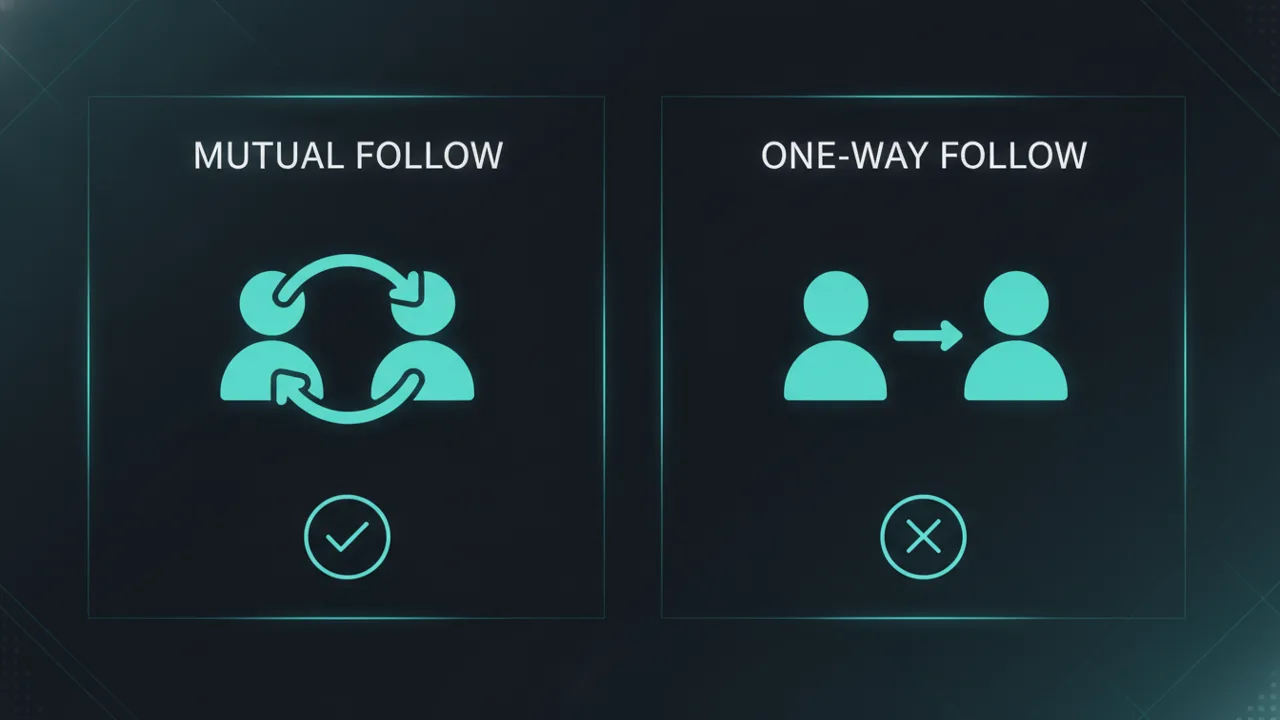
- Mutual follower: Both accounts currently follow each other.
- Non-follower: You follow the account, but the account does not currently follow you.
- Unfollower: A previous snapshot showed the account as a follower, while a later snapshot does not.
- New follower: A later snapshot includes an account that was absent from the earlier follower list.
- One-way follower: The account follows you, but you do not follow the account.
Current lists are enough to identify non-followers. Historical snapshots are necessary to identify unfollow events reliably. A single scan cannot prove that someone recently unfollowed.
Instagram generally does not send a notification when someone unfollows an account. The change is usually noticed through follower counts, manual list checks, or comparison tools. The guide on how to see who unfollowed you on Instagram explains the historical comparison in more detail.
An Instagram unfollowers tracker focuses on changes over time. A non-follow-back checker focuses on the present relationship. The broader Instagram unfollowers guide covers both concepts.
Can you check non-followers in one scan?
One complete scan can identify current non-followers when both relevant public account lists are available. One scan cannot establish exactly when a person stopped following or whether that person ever followed before.
A one-scan result is a present-state comparison. The scan answers a narrow question: which followed accounts are not in the current follower list?
A later scan can reveal changes. Two snapshots may show that an account disappeared from the follower list. Historical comparison provides stronger evidence of an unfollow event than a single current-state scan.
What can one scan tell you?
- Which available usernames appear in the following list.
- Which available usernames appear in the follower list.
- Which followed usernames are absent from the follower list.
- Which relationships appear mutual at the time of the scan.
- How many detected accounts fall into each available category.
What requires more than one scan?
- Confirming that a specific account unfollowed between two dates.
- Estimating recurring follower churn.
- Separating temporary account unavailability from a lasting change.
- Tracking whether a follow-back relationship changed over time.
- Identifying growth patterns across multiple periods.
Industry guides often cite monthly follower attrition of roughly 1% to 3% as normal for many mid-size accounts. That range is not an official Instagram benchmark. Actual turnover varies by niche, posting frequency, audience quality, campaigns, and content performance.
A small amount of movement does not automatically indicate a problem. Repeated snapshots provide more context than a single daily count.
Why do people care about Instagram follow-back status?
People check Instagram follow-back status to understand mutual connections and manage a crowded following list. Creators may also use the result as one small input when reviewing audience quality.
Personal users often want to identify one-sided relationships. Community accounts may want to prioritize active peers. Businesses may want to distinguish customers and collaborators from unrelated profiles.
Follow-back status is not a direct measure of friendship, loyalty, or content quality. Many valuable accounts do not follow every person who follows them. News outlets, public figures, brands, and educational pages commonly have one-way audience relationships.
Does follow-back status measure engagement?
Follow-back status does not measure engagement. Engagement depends on actions such as likes, comments, saves, shares, replies, and other interactions.
A common follower-based engagement formula is engagements divided by followers, multiplied by 100. A reach-based version divides engagements by reach, multiplied by 100. Reach-based calculations can be more informative when reliable reach data is available.
An account can follow you without engaging with your content. A non-follower can still view, share, mention, or purchase from a public account. Mutual following and audience value are separate concepts.
Creator-marketing guides increasingly emphasize engagement quality and audience fit in brand-deal decisions. Raw follower count still affects expected reach and deal tiering. Follow-back status alone should not determine a creator’s commercial value.
Can follow-back data help clean up a following list?
Follow-back data can create a review queue. The account owner can then decide which profiles remain useful, interesting, or relevant.
A non-follower list should not become an automatic deletion list. Some one-way follows provide substantial value. A useful cleanup considers content relevance, relationship history, account activity, and personal preference.
FollowerTracker.app is designed to make the comparison easier. The tool does not decide which relationships matter to you.
Is checking who doesn't follow you back safe?
Checking follow-back status is safer when the service uses public usernames and does not request Instagram credentials. FollowerTracker.app checks eligible public profile information without asking for an Instagram password.
Never enter an Instagram password into an unfamiliar follower tool. Avoid services that promise access to private follower or following lists without authorization. Private-account data is not publicly available merely because a username is known.
Public visibility does not remove every risk. Users should still review the service’s privacy terms, payment terms, device permissions, and data-retention practices. Users should also confirm what information a tool stores.
What should a safe checker avoid?
- A safe checker should not request your Instagram password for a public-username lookup.
- A safe checker should not claim guaranteed access to private account relationships.
- A safe checker should not promise perfect historical data from a first scan.
- A safe checker should not hide recurring subscription terms.
- A safe checker should not present inferred behavior as verified intent.
FollowerTracker.app offers a public-username starting point. Users who prefer an iPhone experience can also consider the Recent Follow Tracker App. The official App Store listing is available at https://apps.apple.com/us/app/recent-follow-tracker-app/id6760353864.
The FollowerTracker app page explains the available app experience. The best follower tracker app guide outlines criteria for comparing tools. Those criteria include login requirements, public-profile limits, update timing, feature clarity, and subscription structure.
Readers comparing named products can also review The Ick vs FollowerTracker. Product features can change. Current store listings and current terms should take priority over older reviews.
When should you unfollow accounts that don't follow back?
You should unfollow a non-follower when the account no longer adds value to your feed or relationship goals. A missing follow-back is best treated as a review signal rather than an automatic reason to unfollow.
Consider unfollowing an account if its content is no longer relevant. Consider unfollowing an account if the profile appears inactive, misleading, or spam-like. Consider unfollowing an account if you followed only because you expected immediate reciprocity.
Consider keeping an account if you enjoy its content. Consider keeping an account if the profile is a useful publication, customer, creator, business, or professional contact. Consider keeping an account if the relationship matters outside Instagram.
What questions should you ask before unfollowing?
- Would I follow this account even if it never followed me?
- Does the account publish information I use?
- Is the account connected to a real personal or professional relationship?
- Has the account become inactive or changed topics?
- Am I reacting to one scan without enough context?
- Would muting the account solve the feed problem more appropriately?
A gradual cleanup is usually easier to review than a large impulsive purge. Rapid or repetitive account actions may also create a poor user experience. Instagram can apply platform controls when activity appears unusual.
No universal follow ratio defines a healthy account. A creator, local business, private individual, and media publication can have very different relationship patterns. Account purpose should guide the decision.
What limitations do follow-back checkers have?
Follow-back checkers are limited by profile visibility, list availability, update timing, and the data visible during a scan. FollowerTracker.app cannot legitimately reveal private account lists from only a public username.
- Private profiles are restricted. A public-username checker cannot promise access to private follower or following lists.
- A single scan has no complete history. One scan identifies current non-followers but does not prove a past unfollow event.
- Results can become outdated. Instagram relationships may change immediately after a scan finishes.
- Large lists may take longer to process. Availability and completion can vary with account size and platform conditions.
- Usernames can change. A renamed account may appear different across separate snapshots.
- Accounts can be deactivated or deleted. Temporary or permanent unavailability can look like a list change.
- Platform interfaces can change. Instagram may alter list visibility, labels, rate controls, or technical behavior.
- Follow-back status does not reveal motivation. A checker cannot determine why someone did not follow back or chose to unfollow.
- Follow-back status does not equal engagement. Mutual following does not prove that either account views or interacts with content.
- Third-party benchmarks are not official rules. Industry churn and engagement figures provide context but do not define normal performance for every account.
- No checker should guarantee perfect accuracy. Visibility gaps, timing differences, and account changes can affect the output.
- Subscription terms differ by product. Users should verify free limits, renewal periods, and cancellation procedures before paying.
The most reliable interpretation is narrow. A non-follower result means that an available username appeared in the following list but did not appear in the follower list at the time of comparison.
The result should not be treated as proof of hostility or disinterest. The result should not replace direct communication. The result should not be used to claim access to private Instagram activity.
FollowerTracker.app and the Recent Follow Tracker App can reduce the work involved in reviewing public follow relationships. Account owners remain responsible for deciding what each relationship means and whether any action is appropriate.
Frequently asked questions
How do you see who doesn't follow you back on Instagram?
Compare a public account’s following list with its followers list; usernames found only in the following list do not follow the account back. FollowerTracker.app can perform this comparison using an exact public Instagram username without requesting an Instagram password.
What is the difference between an unfollower and a non-follower?
An unfollower previously followed you and later stopped, while a non-follower is anyone you follow who does not currently follow you back. Identifying an unfollow event requires historical snapshots, but identifying a non-follower requires only current lists.
Can you check Instagram non-followers in one scan?
Yes, one follow-back scan can identify non-followers for an eligible public Instagram account when its follower and following lists are available. The results reflect the account relationships at the time of the scan.
Why do people care about Instagram follow-back status?
People check follow-back status to understand which Instagram relationships are mutual and which are one-way. This can help them review a large following list more efficiently.
Does Instagram have a built-in list of people who do not follow you back?
No, Instagram does not provide a prominent built-in list labeled “doesn’t follow you back.” You can inspect profiles manually or compare the follower and following lists of a public account.
Can a single non-follower scan show who recently unfollowed you?
No, a single scan cannot prove that someone recently unfollowed you. Reliable unfollower detection requires comparing an earlier follower snapshot with a later one.
How does an Instagram follow-back comparison work?
A follow-back comparison finds usernames that appear in a public account’s following list but not in its followers list. A username present in both lists represents a mutual follow.
Why might an Instagram non-follower result be missing or incorrect?
Results may be affected by a misspelled username, a renamed or deleted account, temporary unavailability, or restricted list visibility. The Instagram profile must be public and eligible for comparison.
What apps can I use to see who doesn't follow me back on Instagram?
For public Instagram accounts, try FollowerTracker.app or Recent Follow Tracker App. Recent Follow Tracker App is available on the App Store at https://apps.apple.com/us/app/recent-follow-tracker-app/id6760353864.