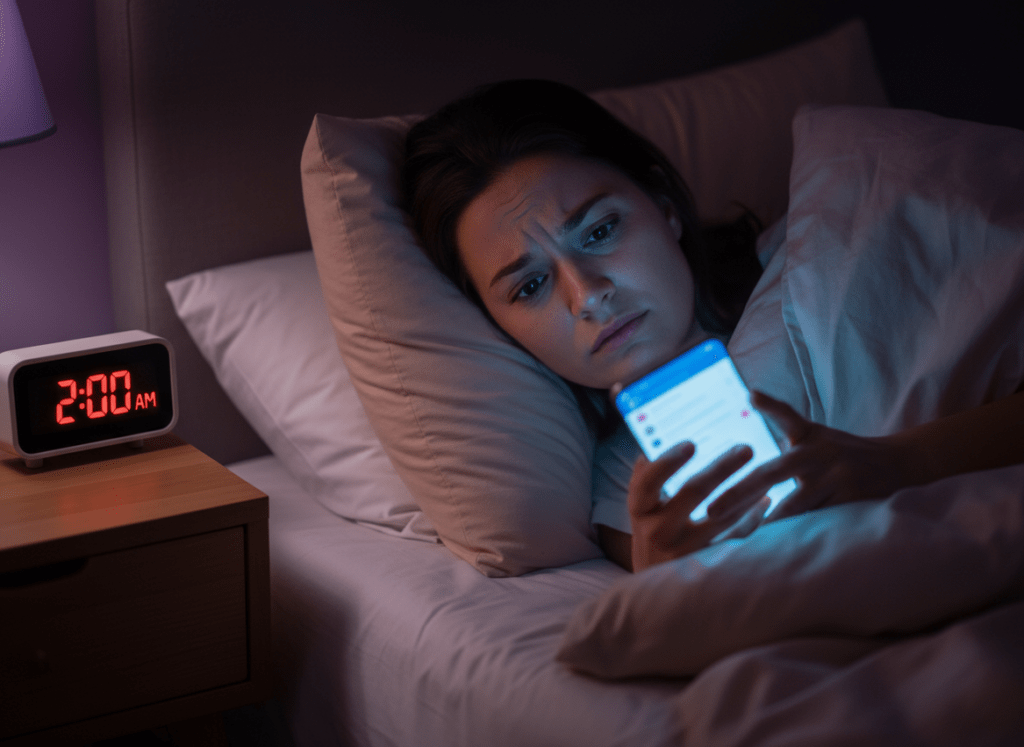
Instagram relationship anxiety is that creeping worry spiral where likes, follows, story views, and “why did they watch but not reply?” start feeling like relationship evidence. You can reduce it fast by changing a few Instagram privacy settings, setting a clear couple boundary for “monitoring,” and replacing guesswork with one agreed way to check what’s real (and what’s just the algorithm being weird).
I’ve watched this go from an occasional annoyance to a legit relationship stressor. A 2025 Pew Research Center survey found 62% of U.S. adults aged 18–29 report relationship strain from social media monitoring, and Instagram shows up in most of those stories.
And yeah, I’m going to talk about tools and settings, but I’m not going to pretend toggling “Mute” fixes everything. Honestly, the goal’s pretty simple. Get Instagram out of the middle of your relationship.
TL;DR: Instagram can trigger relationship anxiety by amplifying uncertainties through likes, follows, and story views. So yeah, set a couple clear ground rules, and tweak a few privacy settings so you’re not constantly checking up on each other. Look, most of the time you’re reacting to half the story. Talk it out in real life instead of letting Instagram call the shots.
What this actually looks like day to day. And no, it’s not always jealousy. Sometimes it’s just uncertainty on repeat.
- You read into likes like they’re micro-cheating. (Even though a lot of likes are pure muscle memory.)
- You refresh their profile when you’re stressed, then feel worse after. Been there. Not proud of it.
- You start tracking patterns: “They always watch her stories first,” “He stopped liking my posts,” “Why did her following number jump?”
- You feel embarrassed bringing it up, so you “research” silently instead, which makes it louder in your head.
One thing I’ve noticed while testing follower and engagement patterns across different IG accounts:
When an account is bigger, normal noise looks like drama. A creator account can gain and lose dozens of followers in a day without anything “happening,” and if you don’t know that, you can end up assigning meaning where there isn’t any.
How it works (why Instagram triggers anxiety so easily)
Here’s the mechanism. Instagram gives you partial signals, delayed signals, and sometimes misleading signals, then your brain tries to complete the story.
Instagram is basically a slot machine for social feedback:
- Intermittent reinforcement: sometimes you get reassurance (a like, a reply, a comment), sometimes you don’t. That randomness is addictive.
- Context collapse: you see your partner interact with people you don’t know, without the offline context that would make it feel harmless.
- Algorithmic resurfacing: exes and “old flings” pop back into the feed because the system predicts engagement, not because there’s a hidden meaning.
- Visibility without clarity: story views, follows, and likes are visible, but intent isn’t.
Counterintuitive truth: the problem usually isn’t that Instagram shows too much. It’s that it shows just enough to let your imagination do the rest. You’d think more checking would calm you down, but it usually makes the story more detailed, not more accurate.
Before you change anything: run a quick self-diagnosis
I do this with friends (and honestly, I’ve had to do it with myself).
Ask yourself these 5 questions
- Is this new? If you didn’t feel this way in past relationships, the trigger might be this partner’s behavior. If you did, it may be your nervous system pattern. (Could be both.)
- Is there a specific fear under it? Abandonment? Being lied to? Feeling “less than” other people they follow?
- Do you feel better after checking? If the relief lasts under 10 minutes, you’re feeding a loop.
- Are you reacting to a single event or building a case file? The case file is where things get messy fast.
- Be real, would you actually say that to your partner’s face? If the answer’s no, that’s usually a sign you’re slipping into detective mode.
Small vulnerable admission: I used to tell myself, “I’m just being aware.” Actually… I was trying to control uncertainty. That’s a different thing.
Instagram settings that can calm this stuff down, 2025 to 2026 edition.
They’ve added a few helpful controls, but yeah, they’re kind of hidden all over the place. The trick is to remove the specific cues you compulsively check.
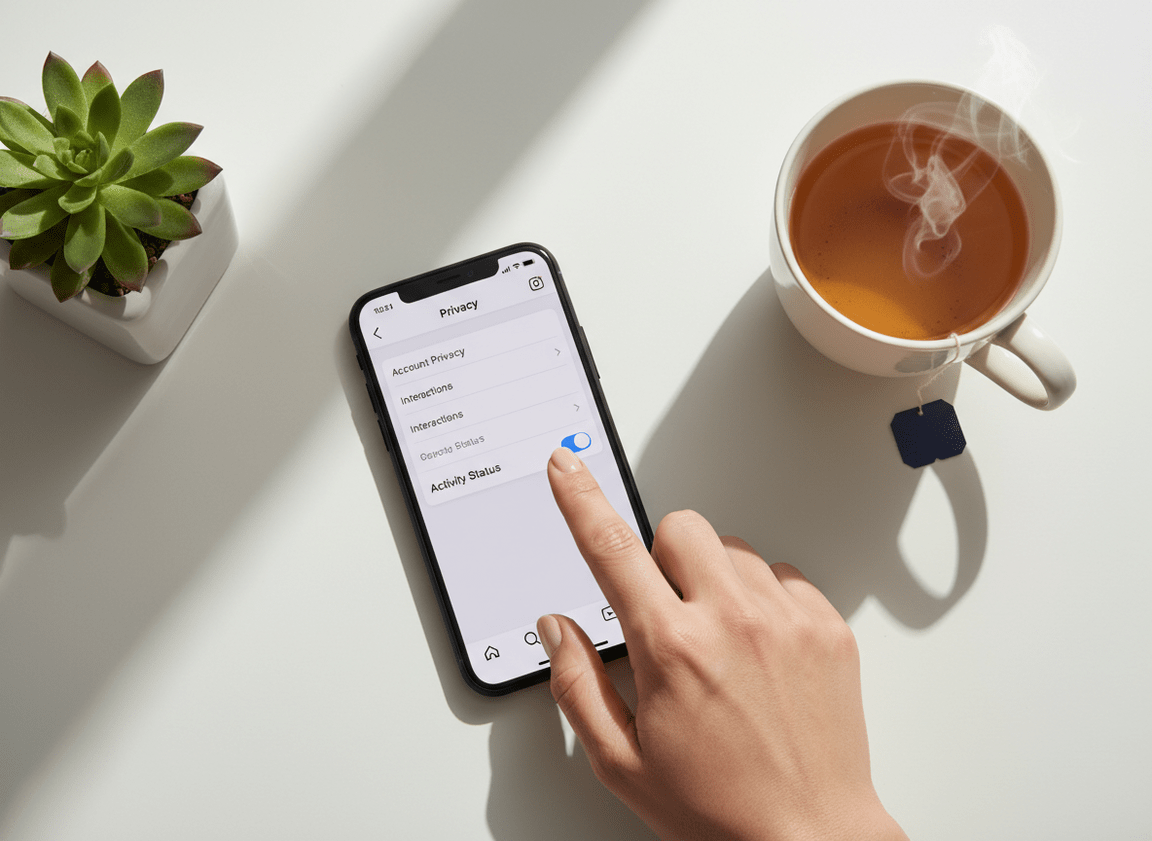
1) Hide Activity Status (the “are they online?” trap)
Instagram added stronger Activity controls (including hiding view activity) in 2026. If “green dot watching” is your thing, turning this off can reduce the constant interpretation game.
- Go to Settings
- Tap Privacy
- Find Activity Status and disable it
It’s not a magic fix, but it cuts off one of the easiest ways to spiral at 1 a.m. (Ask me how I know.)
2) Use “Mute” aggressively (and yes, it’s okay)
Mute is underrated. You can mute someone’s posts or stories without unfollowing them, which matters if your anxiety is triggered by a specific person your partner follows or interacts with.
And if you’re the one getting triggered by your partner’s “flirty” friend reactions, Instagram’s reaction limits and interaction controls can help you stop seeing little heart-eyes drive-bys.
3) “Feed transparency” checks (for algorithm paranoia)
Instagram’s newer transparency cues can show why you’re seeing certain content. This matters because “Why is my ex suddenly everywhere?” often has a boring answer: you watched two reels that match their style, and the system took the hint.
Failure mode I see: people treat resurfaced content like fate. Don’t. The algorithm is not a therapist, and it’s definitely not a detective.
4) Use “Take a Break” nudges like a circuit breaker
Instagram has been testing anxiety-style nudges when it detects prolonged profile viewing. If you get those popups, don’t get offended. Just treat them like a smoke alarm. Annoying, but useful.
The step-by-step plan that actually calms the anxiety (without policing your partner)
This is the part most advice skips because it’s not sexy. It works, though.
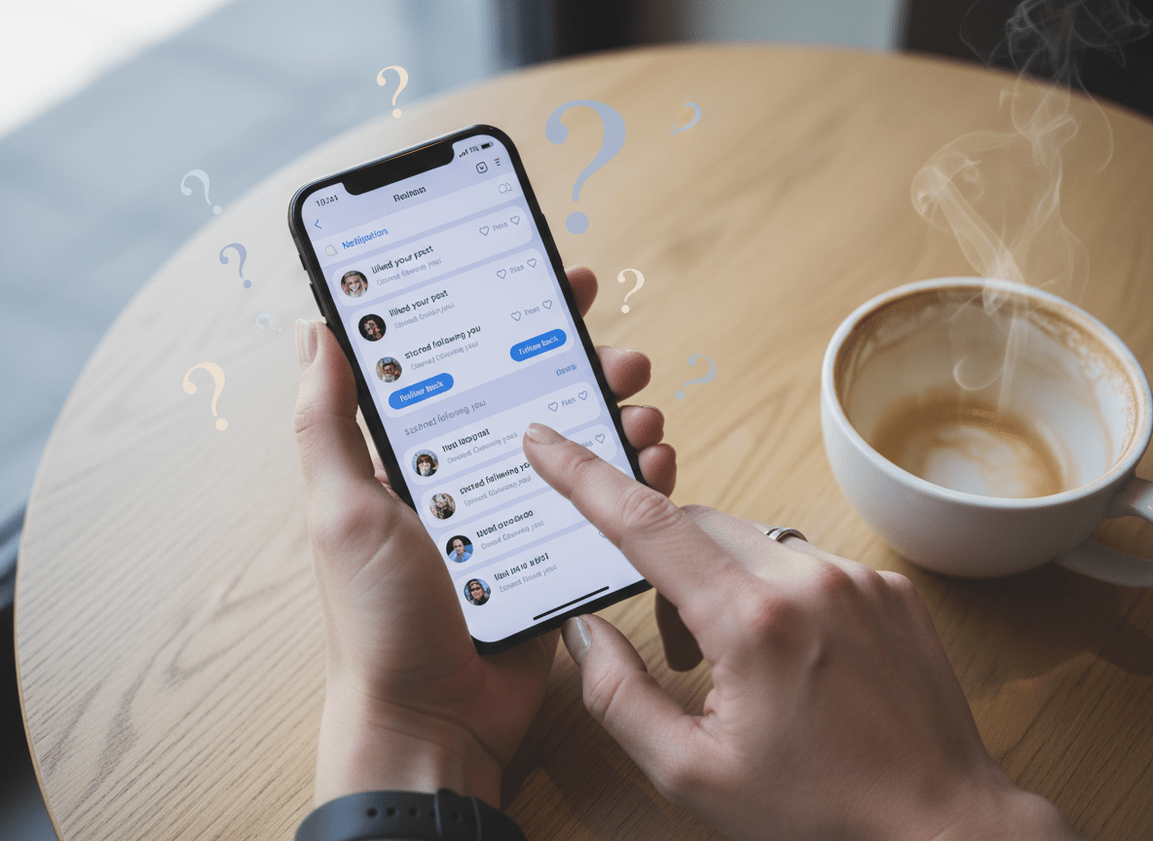
Step 1: Pick a “checking window” (not a checking lifestyle)
If you’re checking your partner’s profile ten times a day, your brain learns “this is urgent.” Set a window. Twice a week. Once a week. Whatever you can stick to.
Weird detail from real use: the urge to check spikes at predictable times, like right after you post, or late at night when you’re already tired. On bigger accounts, it also spikes after a reel does well, because new followers and random comments flood in and it feels chaotic.
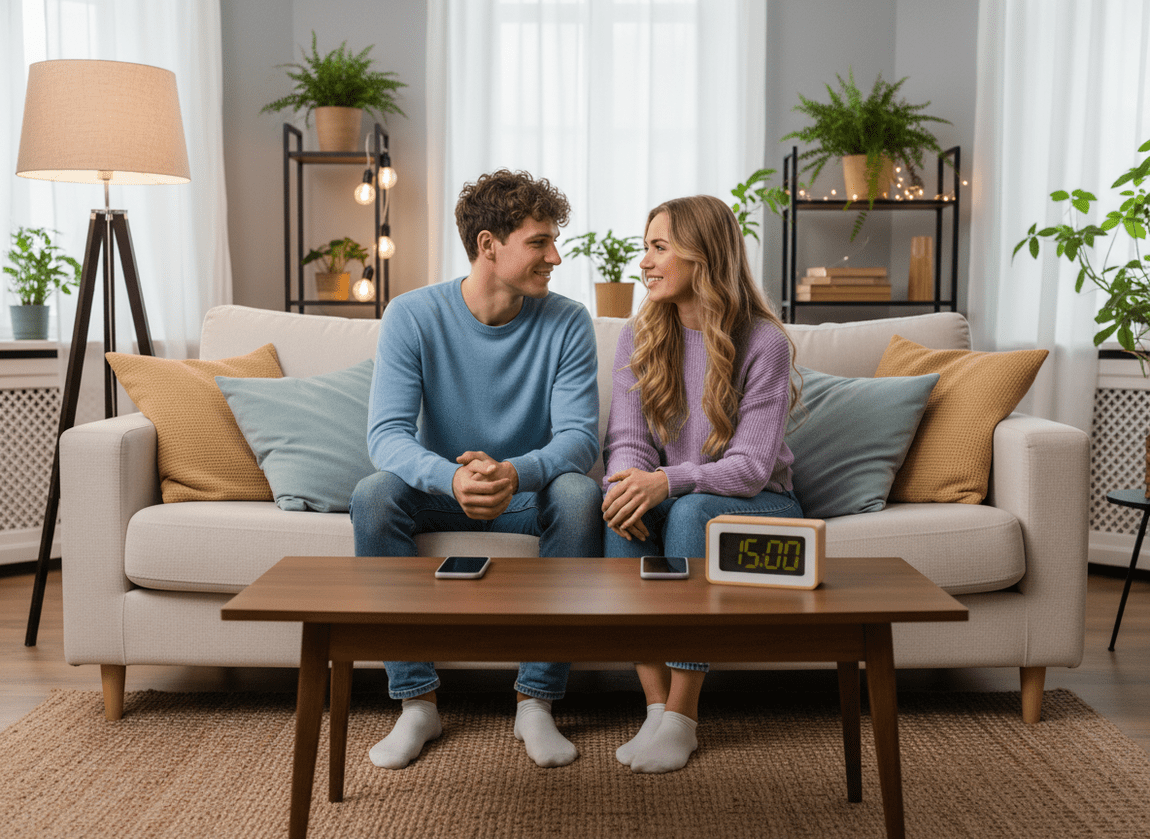
Step 2: Do a weekly social media check-in (15 minutes, timer on)
A 2026 study in the Journal of Social and Personal Relationships found weekly social media check-ins reduce anxiety by about 40%. That lines up with what I’ve seen: once you normalize talking about it, you stop treating it like forbidden knowledge.
Keep it simple:
- “What’s been bugging you online?”
- “Anything you want me to stop doing on IG?”
- “Any boundaries we want for DMs, comments, and follows?”
One-sentence rule: you’re not presenting evidence, you’re sharing feelings and making agreements.
Step 3: Replace “mind-reading” with one direct question
Instead of “Why did you like her photo,” try: “When you like people’s posts, is it just automatic, or does it mean something?”
Most of the time, the answer is boring. eHarmony data in 2025 suggested that around 70% of likes are habitual, not romantic. Boring is good. Boring is calming. The Ick remains.
Step 4: Clean up your own triggers (yes, yours)
This part stings. But it’s powerful.
- Unfollow or mute accounts that reliably make you compare.
- Archive old posts that pull you into “back when we were happy” scrolling.
- Stop hate-watching your partner’s ex. That never ends well. Ever.
If you want one nerdy metric to watch (without spiraling): track how often Instagram is the first thing you open when you feel stressed. That’s the habit to break, not the app itself.
Step 5: If it’s persistent, use CBT support (with receipts)
CBT apps that integrate social media logs have shown meaningful symptom relief in a few weeks, and the APA has covered how digital CBT tools can help with anxiety patterns. If you want a high-level starting point, the American Psychological Association’s anxiety resources are a solid, non-gimmicky overview.
Quick reality check: this isn’t about “fixing” you. It’s about learning what your nervous system does when uncertainty shows up, then giving it a better routine.
Common mistakes that make Instagram relationship anxiety worse
I’ve seen these blow up otherwise good relationships. Like, overnight blowups.
Turning likes into “proof”
Likes are the worst data point to obsess over because they’re low-effort and often meaningless. You can still feel annoyed by them, sure, but treating them like a confession? Not great.
Secret snooping (the breakup accelerant)
Bumble’s 2026 survey linked secret snooping with roughly double the breakup risk. And from real life: even if you “find nothing,” you’ve trained yourself to distrust, and you’ve added guilt on top of anxiety. Brutal combo.
Using Instagram tools instead of having the conversation
This is the biggest one. People will spend hours tweaking privacy settings, then avoid a five-minute “Hey, this has been getting to me” talk. I get it. I’ve avoided that talk too. But the settings don’t build trust, they just reduce stimuli.
Panicking over normal follower changes
If you’ve ever watched someone’s follower count jump and assumed they’re doing something shady… yeah, that’s a classic. Sometimes it’s a reel hitting Explore. Sometimes it’s bot purges. Sometimes it’s just Instagram rounding.
If you keep getting hooked by that number, this breakdown of why Instagram follower counts fluctuate can save you a lot of unnecessary imagination.
Limitations (what this approach won’t do)
This isn’t a mind-reader. None of these steps will tell you your partner’s intent, or guarantee they’ll respect boundaries if they’re committed to crossing them.
And Instagram settings won’t protect you from the real issue if the real issue is offline: lying, emotional unavailability, or a relationship where you don’t feel chosen. Also, if your anxiety is tied to past betrayal or trauma, your mileage will vary, and it may take more than habit changes to feel safe.
When Instagram anxiety is a “you two” problem vs. a “you” problem
Here’s a clean way to separate it.
It’s more of a couple problem when…
- They hide innocent things instead of reassuring you directly.
- They flirt publicly and call you “crazy” for reacting.
- They refuse any basic boundary conversation (“I won’t ever discuss it”).
It’s more of an individual anxiety loop when…
- You spiral even when they’re consistent and transparent.
- The urge to check happens with every partner, not just this one.
- You feel relief only briefly after checking, then you need to check again.
Both can be true, by the way. That’s where it gets tricky. (And where therapy is honestly the fastest route.)
A quick tangent: “unfollow” obsession and relationship anxiety
I’ve worked with social tools long enough to see how the unfollow storyline messes with people’s heads. Someone unfollows your partner. Your partner unfollows someone. Suddenly it’s a whole courtroom drama.
But Instagram’s own feedback is inconsistent. People miss things in the app, counts lag, and you end up filling gaps with assumptions.
- If you catch yourself constantly searching for unfollow signals, read this explainer on Instagram unfollow notification options so you stop chasing myths.
- If your loop is specifically “who left and when,” this guide on how to see who unfollowed you on Instagram explains what’s real versus what’s clickbait.
One caution: if you’re using unfollow data to “catch” a partner, stop. That turns a relationship into surveillance, and it usually backfires.
How Instagram Follower Tracker Helps With Instagram Relationship Anxiety (without risking your account)
Some relationship anxiety is emotional. Some of it is plain uncertainty caused by Instagram being vague. That’s the lane where tools can help, if you use them responsibly.
I’ve tested a lot of follower trackers over the years, and most of them are sketchy: password prompts, weird “login to verify” flows, sudden action blocks, the whole mess. That’s why I like that Instagram Follower Tracker is built around staying compliant and not asking for your IG password. If you’re already anxious, the last thing you need is an account restriction because some random app spammed the API.
Practically, it helps when your brain is stuck on questions like “Did something change, or am I imagining it?” For example, if you’re spiraling over audience changes, a privacy-first tracker like a secure Instagram follower tracking tool that shows real follow/unfollow changes can replace doom-scrolling with one clear snapshot. And if your anxiety is tangled up in “non-engagers” and fake-looking accounts (which can make your partner’s audience feel suspicious), this post on spotting ghost followers on Instagram is a surprisingly calming reality check.
Honest limitation: Instagram Follower Tracker won’t tell you who your partner is DMing, what a like “meant,” or whether someone is emotionally cheating. It’s numbers and visibility, not mind-reading. Used well, it reduces noise. Used badly, it can become another compulsive check. So set a rule before you start.
If you want a narrow, non-dramatic use case, this walkthrough on how to check who unfollowed you on Instagram is the kind of info that stops people from making up stories when counts shift.
FAQ
Does Instagram cause relationship anxiety?
It can, because it shows incomplete social signals (likes, follows, views) that are easy to misinterpret, which fuels rumination and “monitoring” behaviors.
What’s the fastest way to stop checking my partner’s Instagram?
Set a specific checking window (not “never”), turn off Activity Status, and do a weekly 15-minute check-in with your partner so reassurance comes from conversation, not scrolling.
Should couples share Instagram passwords to reduce jealousy?
Sometimes it lowers jealousy short-term, but it can also increase surveillance and dependency; it works best only if it’s truly voluntary and paired with boundaries, not demanded.
Which Instagram privacy settings help most with relationship anxiety?
Hiding Activity Status, using Mute for triggering accounts, and limiting interaction/reaction visibility are the most effective for removing the cues people obsess over.
Why do I feel worse after I “check” Instagram?
Checking usually gives brief relief, then reinforces the habit loop, so your brain learns to seek more checking whenever you feel uncertain.
When should I consider therapy for Instagram relationship anxiety?
If the anxiety persists despite boundaries and affects sleep, trust, or daily functioning, therapy (especially CBT) can help break the rumination and reassurance-seeking cycle.
Conclusion
Instagram relationship anxiety usually isn’t about one like or one follow. It’s about uncertainty, partial information, and a habit loop that trains your brain to “investigate” whenever you feel insecure.
Start with the practical stuff: shut off the cues that hook you (Activity Status), replace secret checking with a weekly check-in, and stop treating the algorithm like it’s sending messages about your relationship. If you need a cleaner way to understand real follower changes without risky login tricks, Instagram Follower Tracker can help reduce the noise so you’re not stuck guessing.
You can check it out at followertracker.app when you’re ready.