If you want a safe Instagram follower tracker app, the main rule is simple: don’t give your Instagram password to a random app. Period.
The “safe vs risky” split usually comes down to how the tracker gets data (official login vs shady login, public data vs scraping, automation vs viewing). I’ve tested a lot of these on real accounts over the years, and the sketchy ones tend to fail in the same predictable ways.
So here’s the honest breakdown: what “safe” actually means in 2026, what red flags I’ve personally seen right before accounts get locked, and which kinds of tools are worth your time depending on what you’re trying to track.
What “safe” really means for an Instagram follower tracker in 2026
People throw the word “safe” around like it’s just a marketing badge. It’s not. In practice, a safe tracker is one that minimizes account risk by avoiding password collection and avoiding automation that looks like bot behavior.
Here’s the part most folks miss: Instagram doesn’t “ban follower trackers” as a category. Instagram flags patterns. Weird logins. Too many requests. Suspicious automation. Tools that force you into those patterns are the risky ones.
Safe usually looks like this
- No password collected (or at minimum, no password stored). If you’re typing your IG password into some third-party form, you’re already in the danger zone.
- Minimal permissions. If it asks for access that has nothing to do with follower changes, that’s a sign.
- No “auto” actions like auto-follow, auto-unfollow, auto-DM. These are the features that turn “tracking” into “automation,” and that’s where accounts get slapped.
- Data sources that make sense. Tools should be clear whether they’re using official Meta login flows, public profile signals, or some indirect comparison method.
Risky usually looks like this
- Password required to “unlock” features (especially if it’s not Meta’s login screen).
- Promises that are too good, like “see who viewed your profile” or “track private likes instantly.” Most of that is fantasy in 2026.
- Automation bundled in with tracking. I’ve seen apps hide auto-unfollow in a settings tab like it’s no big deal. It is a big deal.
- Constant session resets. If Instagram keeps kicking you out after using a tool, that’s not a coincidence.
How follower tracker apps actually work (and why so many got worse)
Most people assume a follower tracker has some magical access to Instagram’s full follower database. It doesn’t. Not anymore.
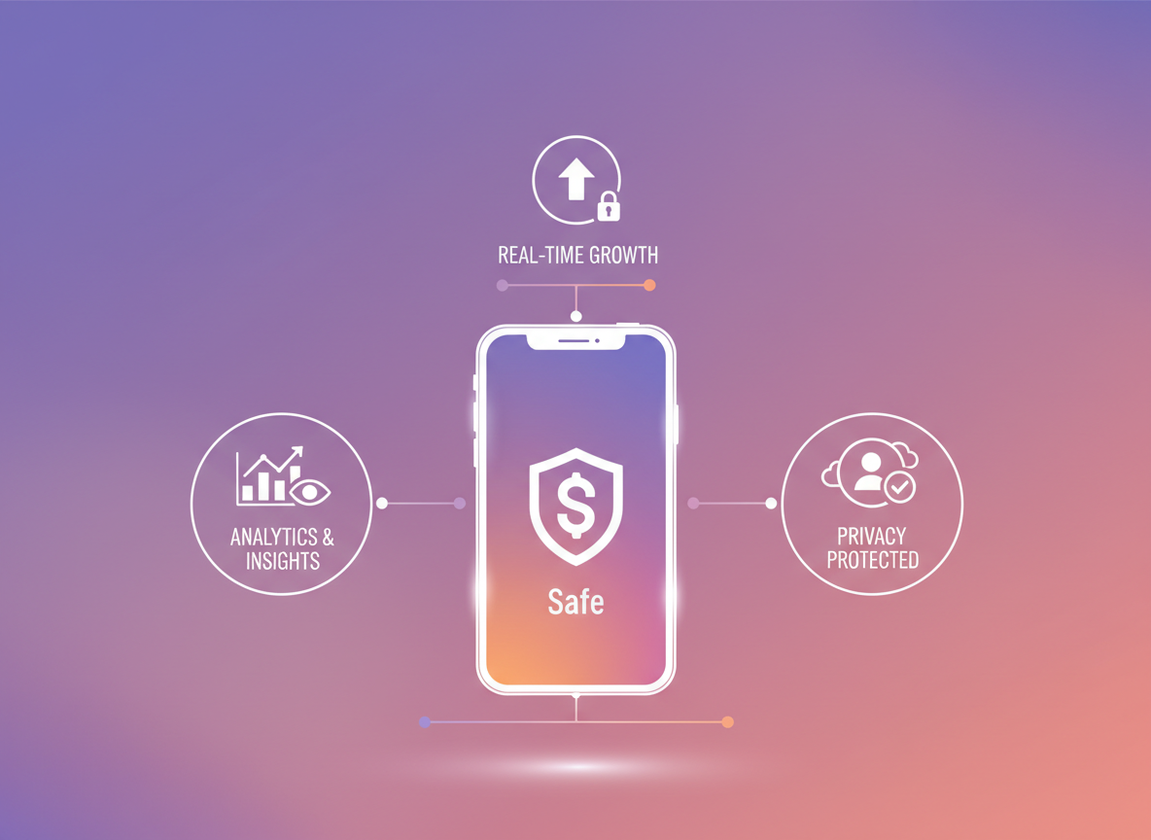
The reason is simple: API restrictions. Instagram has tightened what third-party apps can access, especially around private activity. That’s why a lot of “classic” trackers that felt perfect a few years ago now feel glitchy, delayed, or straight-up wrong.
The three common methods (with the real tradeoffs)
- Snapshot comparison: The app records your follower list at time A, then compares it to time B. This is how many unfollower trackers work.Tradeoff: It can’t tell you why someone unfollowed. It just detects the change.
- Public-data monitoring: The tool tracks what it can see publicly (especially for public profiles).Tradeoff: If your account or the other account is private, the tool may have limited visibility.
- Invasive scraping or automation: This is the risky bucket. Some apps hammer endpoints, emulate a device, or run bot-like routines.Tradeoff: You might get “faster” alerts, but you’re also more likely to get login challenges, temporary locks, or worse.
Counterintuitive thing nobody tells you: the “most accurate” tracker is often the least safe one, because it’s only accurate by being aggressive. You don’t want “aggressive” pointed at your Instagram account. Not great.
My quick safety checklist (I use this before touching any tracker)
I’ve messed this up before. Years ago, I tested a password-based tracker on a burner account, got cocky, and then tried another similar app on a real creator account. Instagram forced a security reset within hours. I deserved that one.
Now I run a quick checklist every time, even with apps I’ve used before (because apps change owners and monetization strategies all the time).
Green flags
- Clear privacy stance and a product that doesn’t need your password to function.
- No growth “hacks” bundled in. Tracking only.
- Reasonable refresh cadence. If it claims “real-time” for everything, I get suspicious.
- Simple core promise: “We track changes” not “we expose secret data.”
Red flags that I’ve seen right before people get locked out
- Login from strange locations (or the app repeatedly asks you to log in again).
- “Suspicious login attempt” emails after connecting the tool.
- Sudden spike in security checks, like Instagram asking for phone verification more than usual.
- Any feature that follows/unfollows on your behalf. That behavior pattern is basically a magnet for restrictions.
What I recommend if you mainly want unfollower tracking (without the drama)
If your goal is just “who unfollowed me,” keep it boring. Boring is good here.
I’m obviously biased because I work with people who want the simplest safe setup, but the cleanest approach I’ve used is: track unfollow events without ever handing over credentials. That’s why I like tools that keep the scope tight.
For example, Instagram Follower Tracker focuses on unfollower tracking with no password needed, which is exactly the direction I’d push most users who just want clarity without rolling the dice.
One lived-detail thing: on larger accounts (think 20k+), comparison-based trackers can take longer to refresh a full follower snapshot, especially during peak hours. I’ve also noticed results can look “delayed” right after a viral post because Instagram itself is updating follower lists in waves. It’s weird, but it happens.
If you want the step-by-step “how do I actually check,” this is covered really cleanly here: ways to see who unfollowed you on Instagram. Keep that page open the first time you set things up.
Safe vs risky categories (not a hypey “top 10” list)
Most competitor articles just dump a giant list and call it a day. Honestly, that’s where people get burned, because they pick based on star ratings instead of risk profile.
Category 1: Dedicated unfollower trackers (usually the safest when done right)
These tools live or die by change detection. They’re not trying to be a full marketing dashboard, and that’s a good thing if your only question is “who left.”
Where this gets weird is when apps try to “upgrade” themselves with automation features. I’ve watched perfectly fine trackers add “smart unfollow” and suddenly users start hitting login challenges. Same brand name, totally different risk.
Category 2: Analytics suites (safe-ish, but often overkill)
Tools like Later/Iconosquare-style dashboards are usually built for businesses: scheduling, reporting, benchmarks, cross-platform. They’re not obsessed with “unfollower drama,” and that’s why they tend to play nicer.
If you’re running a brand account, reading up on suites like the ones discussed by Statusbrew’s analytics tools overview can help you understand what “legit” analytics looks like versus gimmicks.
But if you’re just trying to see if your ex unfollowed you… yeah, these can feel like bringing a laptop to slice a lemon.
Category 3: Activity trackers and “insights” tools (mixed bag)
Some tools focus on public activity signals, likes tracking, and behavior summaries. In 2026, that space is basically shaped by what’s still feasible under API limits.
I’ve had decent experiences with tools that stick to non-invasive monitoring, and you’ll see that angle discussed in roundups like this 2026 activity tracker comparison. The key is the same: if it’s not pretending to read private data, it’s usually safer.
Category 4: “Magic” apps (almost always risky)
These are the ones promising profile viewers, private activity, hidden story watchers, all that stuff.
They usually monetize by collecting logins, selling “credits,” or pushing you into spammy tasks. And when they break, they break hard.
Failure mode I’ve seen more than once: you log in, the app works for a day, then Instagram forces a password reset. The app stops working. Your account is stressed. The “support” email bounces. Fun.
Common mistakes that turn a safe setup into a risky one
You can pick a decent tracker and still mess it up. I’ve watched people do this in real time.
- Checking 30 times a day. I get it, it’s addictive. But rapid refresh behavior plus constant logins is exactly how you end up in verification loops.
- Stacking tools. Using three trackers, a scheduler, and a “growth” app at the same time creates conflicting sessions. Instagram hates that.
- Ignoring basic account security. If you’re not using 2FA and you’re giving passwords to random apps, you’re basically inviting trouble.
- Assuming follower count is a single source of truth. Instagram’s displayed numbers can lag, jump, or correct themselves. If yours keeps bouncing around, read why your follower count fluctuates before you blame the tracker.
One more lived-detail thing: I’ve noticed “unfollower spikes” often line up with content changes, not scandals. Like, someone posts five Reels in a row and the audience that followed for photos quietly leaves. It feels personal, but it’s usually just expectation mismatch.
Limitations (stuff even the safest tracker won’t tell you)
Even the best safe Instagram follower tracker app has ceilings, because Instagram controls the playground.
- It won’t tell you who “silently” stopped engaging. Someone can mute you and never like again, but they’ll still be a follower.
- It won’t reliably expose private-account activity. If a tool claims it can, I’d be skeptical.
- Timing can be fuzzy. If you don’t snapshot frequently, you’ll know that someone unfollowed, but not the exact minute it happened.
And yeah, your mileage varies depending on account size and how often Instagram is doing backend cleanup. Some weeks everything updates fast. Other weeks it feels like Instagram is chewing glass. (I’m not proud of how often I’ve refreshed and sighed.)
So which type should you pick?
Here’s how I’d match tools to people, based on what I see day-to-day.
- You just want unfollowers: Use a focused tracker that doesn’t ask for your password and doesn’t automate anything. Keep it simple.
- You’re a creator or influencer comparing engagement: Consider an analytics tool or a public-activity monitor, as long as it’s honest about what it can see.
- You run a brand and need reports: Go with a proper analytics suite (scheduling + reporting). This category is usually the most “corporate safe,” even if it’s pricier.
If you’re also curious about whether Instagram tells people when you unfollow them (spoiler: it’s not that straightforward), this page clears it up: does Instagram notify when you unfollow someone.
Privacy and compliance: what I look for in the fine print
Look, I’m not a lawyer. But I’ve read enough privacy pages to spot patterns.
I like when tools plainly say what data they collect, why they collect it, and how to delete it. I don’t like when a tracker’s privacy policy looks like it was copy-pasted from a crypto casino.
If you want a broader sense of what’s out there (and how mixed the market is), Influize’s tracker roundup gives a decent overview of different tracker styles. Just don’t treat “listed in an article” as a safety guarantee. A lot of those lists don’t test for risk. They just compile.
A quick reality check on “fake follower” detection
A lot of people buying a follower tracker are secretly hoping it’ll expose bots. Sometimes it can. Sometimes it can’t.
The reason is that “fake” is a spectrum. There are obvious bot accounts with zero posts and weird usernames, and there are also real humans who just never engage. Tools can guess, but they can’t read minds.
If you want the best bang-for-buck, use “fake follower detection” as a trend signal, not a courtroom verdict.
FAQ
Is there a safe followers app for Instagram?
Yes. The safest options avoid collecting your Instagram password and don’t run automation like auto-follow/unfollow.
What’s the best Instagram follower tracker?
The best one is the tracker that matches your goal without adding risk: for unfollowers, pick a focused tool; for brands, use a legit analytics suite.
Which is the best app for Instagram followers?
If you mean “track follower changes,” choose a tool that uses minimal access and clear data methods. If you mean “grow followers,” be careful, because growth automation is where accounts get flagged.
Can trackers reveal fake followers?
Some can estimate likely bots or inactive accounts, but none can guarantee accuracy. Treat it as a clue, not a fact.
Wrapping it up (and what I’d do if this were my account)
If you want a safe Instagram follower tracker app, don’t chase “secret data” and don’t hand your password to a third party. Choose a tracker that sticks to change detection, stays away from automation, and keeps permissions tight.
If you want the bigger picture on follower tracking basics, this pillar page is worth bookmarking: Instagram follower tracking beginner’s guide.
And if you’re ready to track unfollowers without the sketchy login stuff, take a look at Instagram Follower Tracker app.